Medical imaging departments rely on different technologies to support diagnostic workflows. The right equipment depends on the type of examinations performed, patient needs, available space and the way a healthcare facility manages its imaging services.
Radiology solutions can include fixed digital radiography rooms, mobile radiography systems and medical image printing equipment. Although these technologies may be used within the same department, each serves a different purpose.
What Are Radiology Solutions?
Radiology solutions cover the equipment and supporting technologies used to acquire, process, manage and present medical images. Depending on the facility, this may include X-ray systems, digital detectors, image-processing software, workstations and printers.
The main objective is to support the production and review of diagnostic images while helping healthcare professionals maintain an efficient workflow. Equipment selection should account for clinical requirements, compatibility, service support and the needs of the imaging team.
Understanding a DR Room
A digital radiography (DR) room is a dedicated imaging space designed for examinations using digital X-ray technology. These rooms typically include an X-ray generator, an X-ray tube, a patient table or wall stand, and a digital image receptor.
During an examination, the system captures X-ray information and converts it into a digital image for review. Depending on the configuration, images may be available for assessment shortly after acquisition.
Fixed DR rooms are commonly used for routine examinations such as chest, skeletal and other general radiographic studies. Their fixed positioning can support a consistent workflow for patients who can be brought to the imaging department.
When evaluating a DR room, healthcare facilities should consider examination volume, room dimensions, patient accessibility, detector options and integration with existing hospital information systems.
Where Mobile Radiography Fits In
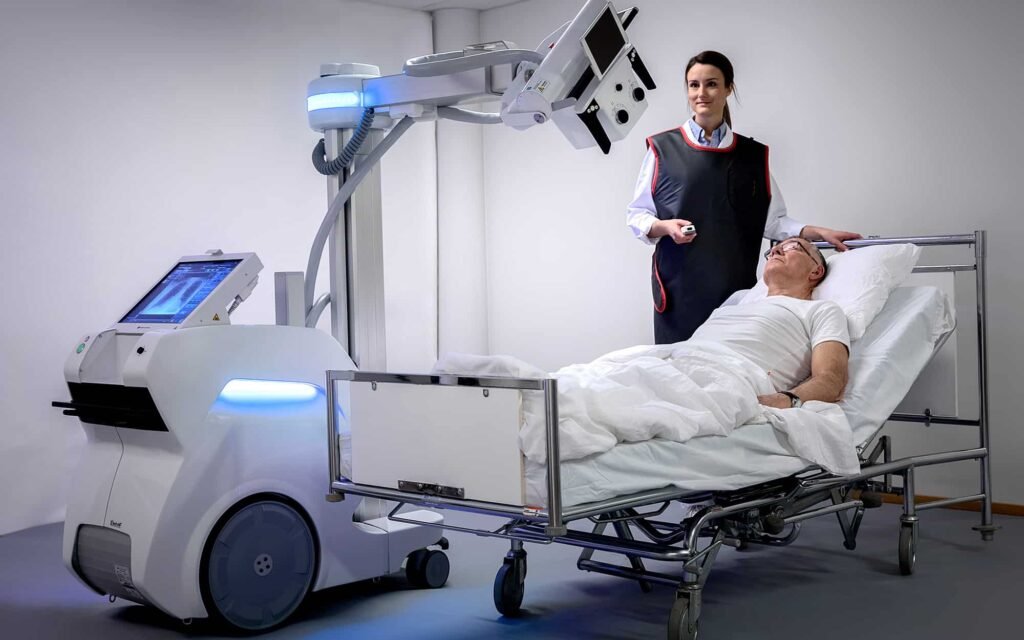
Mobile radiography systems bring X-ray imaging to the patient rather than requiring the patient to travel to a fixed imaging room. They can be useful in intensive care units, emergency departments and other settings where moving a patient may be difficult or clinically inappropriate.
Portable systems can support bedside examinations and reduce the need to transfer certain patients between departments. However, their operation requires appropriate staff training, radiation-safety procedures and suitable infection-control practices.
Compared with fixed DR rooms, mobile systems offer greater flexibility in location but may involve different workflow, positioning and operational considerations. The best choice depends on how frequently bedside imaging is needed and the clinical environment in which the system will operate.
What Is the DRYSTAR 5302?
The DRYSTAR 5302 is a medical dry imaging system designed to produce hard-copy medical images on compatible film. Unlike a DR room or mobile radiography unit, which is used to acquire X-ray images, a medical imager is used to print images for physical review, distribution or recordkeeping where required.
Dry imaging technology can avoid the wet chemical processing associated with traditional film development. However, the media, connectivity and workflow requirements depend on the specific system configuration.
Facilities considering a medical imager should verify compatibility with their imaging equipment, supported film formats, expected printing volume and service requirements.
How to Choose the Right Equipment
The decision should begin with a review of clinical needs and existing infrastructure. A fixed DR room may be suitable for routine department-based imaging, while mobile radiography can help address bedside imaging requirements. A dry imager may be relevant where physical copies of medical images are still needed.
Before investing, assess total operating costs, staff training, maintenance, system compatibility and future expansion plans. Consulting the manufacturer’s technical documentation and qualified imaging professionals can help ensure that the selected radiology solutions meet the facility’s actual requirements.